



“Even when the body perishes, the soul is neither born nor does it die; it is eternal and everlasting.”
Although humans and animals emerge from the same biological foundations, they differ profoundly in their modes of understanding the world, the depth of their consciousness, and their awareness of existence. Humans have developed language, symbolic reasoning, religion, science, art, music, philosophy, and complex social systems. As a result, they are capable not only of survival but also of contemplating questions of purpose, meaning, and existence.
Animals, too, exhibit intelligence, emotion, and social behavior, yet they do not demonstrate the same degree of abstract reasoning, long term planning, or spiritual inquiry. Despite these differences, both humans and animals are born, live, suffer, form relationships, age, and ultimately die—revealing the fragility and interconnectedness of life.
Science explains these similarities through evolutionary processes, but the true nature of consciousness remains unresolved.
Questions such as what consciousness is, how it arises, and what becomes of it after death continue to challenge scientific inquiry. Because of these limitations, topics such as the continuity of consciousness and rebirth fall outside the scope of empirical testing.
In this context, Tibetan Buddhist philosophy offers a profound perspective on rebirth, karma, and the eternal journey of consciousness. Within Buddhist thought, consciousness is regarded as independent of the physical body—continuous, dynamic, and capable of taking new forms after death. Thus, rebirth is not merely a matter of belief; it is understood through meditation, experience, and spiritual practice.
Many religious traditions similarly regard the soul as immortal, entering heavenly or subtle realms after death. These teachings hold that the soul transitions to new states based on karma and moral conduct. Yet no one has returned in a physical form to verify these realms directly. Consequently, many people prioritize evidence based knowledge and consider science more reliable.
Science relies on observable, measurable, and repeatable data, whereas religion interprets invisible dimensions—consciousness, the soul, and the post mortem journey—through experience and faith. The divergence between science and religion is therefore not a matter of opposition but of methodology: one measures the external world, the other interprets the internal.
This raises an important question: if rebirth is real, why do scientists not accept it, and why do high level Buddhist masters not present it as scientific evidence?
The answer lies in the fundamental difference between scientific and spiritual epistemologies. Science demands measurable, replicable evidence that yields consistent results across observers. Rebirth and consciousness cannot be tested in a laboratory because consciousness itself is an inner experience beyond the reach of scientific instruments. Thus, scientists do not reject rebirth; they simply do not accept it because its evidentiary form does not align with scientific methodology.
Buddhist masters—tulkus, khenpos, and lamas—do not attempt to frame rebirth as scientific proof because the purpose of spiritual practice is not to compete with science but to cultivate consciousness, compassion, and liberation. Even if rebirth were scientifically verified, it would not guarantee that individuals would engage in spiritual practice, for evidence alone does not does. transform behavior—experience
This is why Gautama Buddha taught rebirth not as a scientific claim but as a truth realized through meditation, introspection, and direct experience. In his teachings, dharma and karma are clearly distinguished: dharma is the path of purification and liberation, while karma is the energetic imprint of actions that shapes future experiences and rebirth.
Ultimately, the question of rebirth is not one that science can resolve; it is a matter for consciousness itself to understand. Science measures the visible world; religion explores the invisible. Science studies external phenomena; religion examines inner experience. These two perspectives are not contradictory—they are complementary approaches to truth pursued from different directions.
For this reason, rebirth belongs not to scientific debate but to the deeper, personal realm of inner realization.
Author’s Philosophical Perspective My philosophical perspective on human consciousness, existence, and the continuity of life and death is grounded in an integrated evaluation of both scientific and spiritual traditions. Science possesses the capacity to explain the structures, laws, and processes of the physical world with analytical precision. Yet the subtle dimensions of consciousness—soul, subjective experience, and the possible continuation of awareness after death—remain complex topics that scientific inquiry has not fully encompassed.
Religious and philosophical traditions attempt to understand these invisible dimensions through experience, meditation, and spiritual practice. Concepts such as rebirth, karma, and the continuity of consciousness form part of humanity’s long intellectual tradition of questioning its own existence. These ideas are not merely matters of belief; they are philosophical expressions of humanity’s enduring curiosity about the nature of being.
For me, the search for truth cannot be confined to a single method. Science seeks evidence; spirituality seeks experience. Yet truth may lie beyond evidence and broader than experience. Therefore, the exploration of life’s meaning, the nature of consciousness, and the possibility of a post mortem journey can only be understood fully through the combined pathways of science and spirituality.
In this view, understanding the true depth of human consciousness requires both the scientific analysis of the external world and the spiritual exploration of the internal world. These two perspectives are not oppositional; rather, they are complementary pillars that together form the foundation of human knowledge.
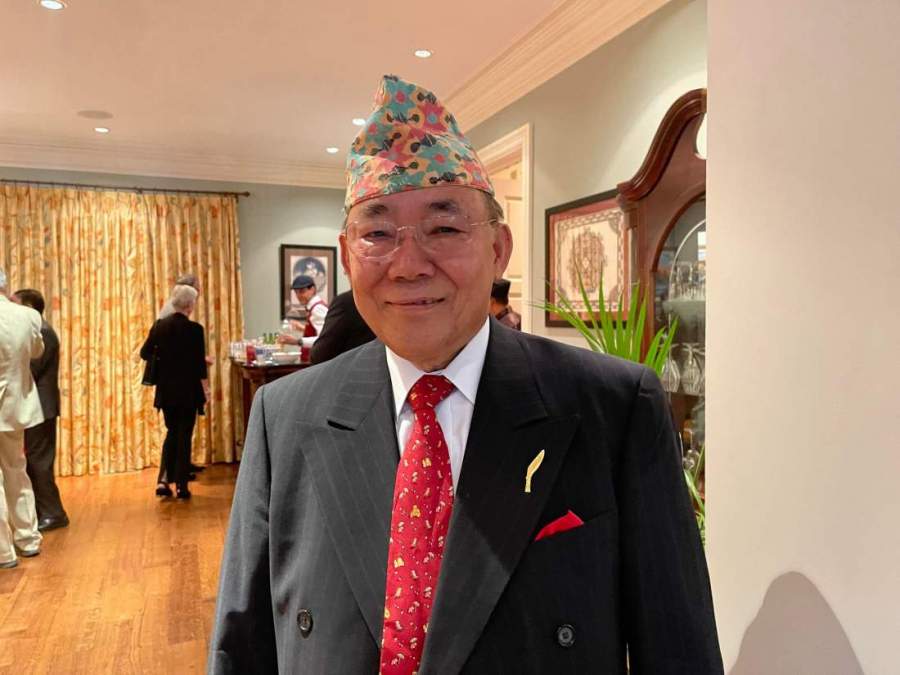
Author: Dig Bahadur Tamang




Comment