


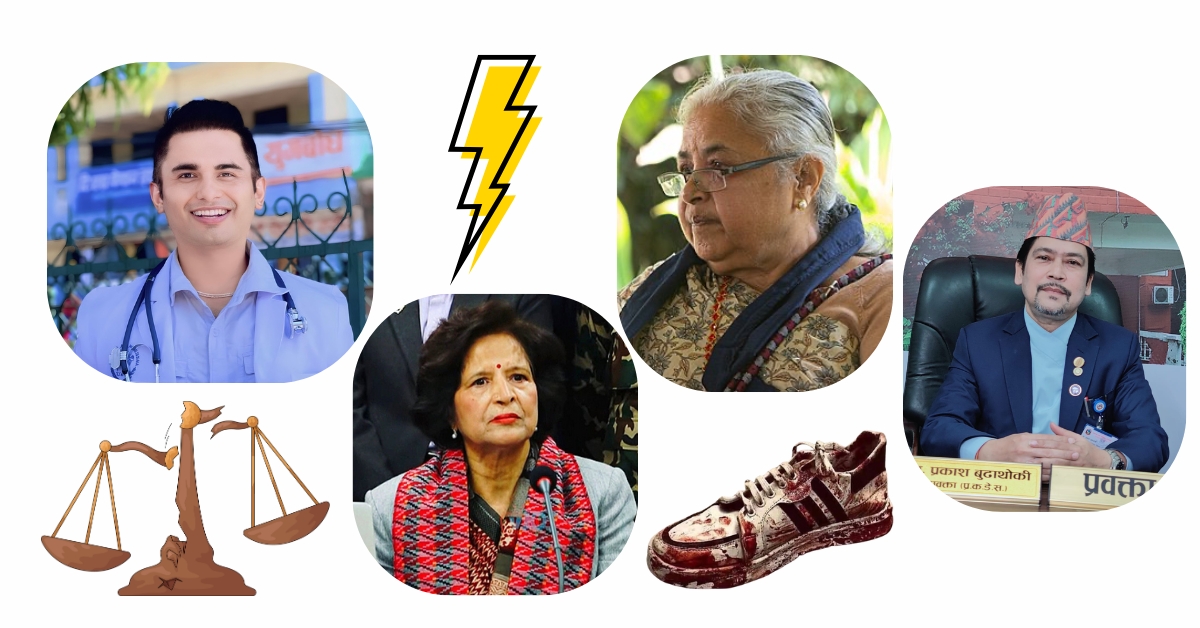
Kathmandu, November 22, 2025 – In the fragile aftermath of Nepal’s seismic Gen Z uprising, which claimed 76 lives and dismantled a corrupt regime in September, the Health and Population Ministry stands accused of embodying the very rot the protests sought to excise. Less than two months after young demonstrators stormed Singha Durbar and torched symbols of elite excess, critics argue that Minister Dr. Sudha Sharma Gautam’s leadership has devolved into a parade of crony appointments,
partisan favouritism, and unfulfilled promises. A pivotal case – the stacking of regulatory bodies with insiders already drawing multiple government responsibilities – has ignited outrage among physicians, youth activists, and even her own professional peers, raising stark questions about whether Sharma’s tenure is a deliberate sabotage of the reform mandate or simply the inertia of a system too entrenched to change.
The controversy erupted publicly this week when Dr. Sandesh Lamsal, a Dang-based physician and vocal critic of health sector graft, lambasted Sharma on social media for appointing Dr. Prakash Budhathoki as a member of the Nepal Medical Council (NMC). Budhathoki, already entrenched in three high-level roles – spokesperson for the Ministry of Health and Population, chief of the Health Emergency Operation Centre under the Nepal Disaster Risk Reduction Office, and vice president/coordinator for Bagmati Province in the Nepal Medical Association – now oversees medical ethics, licensing, and professional standards as an NMC member. “As a physician, I hold genuine respectfor both of your contributions,” Lamsal wrote in his November 21 tweet. “Yet, in the aftermath of the Gen Z protests, does this reflect the accountability we demanded? How can one individual effectively oversee such a range of governmental/official responsibilities?”
Lamsal’s post, tagged to Prime Minister Sushila Karki, echoes a groundswell of similar grievances from the medical community. The National Doctors’ Association Nepal (NDAN), affiliated with the Communist Party of Nepal (Unified Marxist-Leninist), issued a scathing statement days after Sharma’s October 26 swearing-in, questioning her appointment outright and warning that reassigning “former advisors” over “marginalised young doctors” undermines the Gen Z movement’s call for merit-based governance. NDAN demanded a “zero-tolerance policy against violence toward health personnel” and higher compensation for remote-area workers, but Sharma’s response has been dialogue without deliverables. The Nepal Medical Association (NMA), in a November 1 memorandum, highlighted chronic shortages of doctors, medicines, and testing facilities at primary health centres, urging “immediate implementation of equal pay policies” – a plea Sharma has yet to address beyond vague assurances.
Budhathoki’s expanded portfolio amplifies these concerns. As ministry spokesperson, he has publicly touted extensions for task forces on nurses’ pay parity and directives for\ hospitals to align salaries with government standards – measures that, on paper, advance equity. Yet his concurrent roles in emergency operations and the NMA create glaring conflicts: He shapes policy as a ministry official, enforces it through disaster response, influences professional standards via the association, and now regulates the
very field he dominates. No public disclosure exists of additional benefits – such as multiple salaries, travel allowances, or per diems – but Nepal’s opaque civil service rules allow senior officials like Budhathoki to draw multiple stipends, potentially exceeding Rs 200,000 monthly, according to health sector insiders citing 2024 audit reports from the Commission for the Investigation of Abuse of Authority (CIAA). The NMC appointment, formalised via ministerial decree without competitive bidding, flouts
the Gen Z demand for transparent, merit-driven selections, as outlined in the protesters’ September manifesto circulated on platforms like Discord.
This is no isolated lapse. Sharma’s brief tenure has been marred by complaints from frontline workers. The Union of Professional Health and Care Sector Workers in Nepal (UNIPHIN) submitted a memorandum on November 13, decrying “growing irregularities and malpractice” in private hospitals and medical colleges – issues Sharma pledged toprobe during her oath-taking but has yet to act on. Nurses, still haemorrhaging abroad due to substandard pay (averaging Rs 20,000 monthly in private facilities versus Rs 34,730 mandated for government roles), continue protests despite a ministry circular issued on October 13. Resident doctors in private colleges threaten street action over allowances frozen at Rs 48,000, blaming Sharma’s ministry for reversing Medical Education Commission safeguards. Even as Sharma announced psychosocial counselling for Gen Z protest victims – her self-proclaimed “first decision” – implementation lags, with only pilot programs in Kathmandu funded at Rs 50 million, leaving rural survivors underserved.
Sharma’s trajectory only deepens the irony. Born in 1959, the obstetrician-gynaecologist built a formidable career: Fellow of the Royal College of Obstetricians and Gynaecologists (UK), master’s in public health, former director of Paropakar Maternity Hospital, and president of the Nepal Society of Obstetricians and Gynaecologists, South Asian Federation of Obstetrics and Gynaecology, and NMA. She spearheaded the Safe Motherhood and Newborn Health Roadmap 2030 as a DFID consultant and co-directs CIWEC Hospital. Yet her 2008-2011 stint as Health Secretary exposed the system’s underbelly. In her 2021 memoir, Singha Durbar ko Ghumne Mech (The Revolving Chair of Singha Durbar), Sharma chronicles “large-scale corruption and patriarchal bureaucracy” in health procurement, where tenders for vaccines and equipment vanished into political pockets. She resigned amid humiliations – denied promotions despite top rankings, sidelined by male colleagues – and fled to Tanzania for five years
as head of health and nutrition, a move she framed as self-preservation in a memoir reviewers called a “frank appraisal of the country’s healthcare failures.”
That candour now haunts her. NDAN explicitly cited her past resignation as a cautionary tale, warning that “repeating such actions in the current context could be detrimental to the country.” Appointed October 26 amid backlash over dropped nominees like fugitive Khagendra Sunar, her induction prioritised loyalty over the meritocracy Gen Z protesters demanded in their push for “directly elected heads of state” and “institutional reforms” to curb graft. The September uprising, sparked by a social media ban but fueled by
unemployment (youth rate at 19.2 per cent) and inequality (Gini coefficient 0.33), toppled K.P. Sharma Oli’s coalition after 76 deaths and 2,113 injuries from security forces’ excessive force – 13,182 rounds of ammunition had been fired over the two days- 2,642 live bullets, 1,884 rubber rounds, and 6,279 tear-gas shells, violating crowd-control protocols. Protesters torched party offices and Oli’s residence, demanding
an end to “politically selective institutions.”
Sharma’s actions mock this legacy. Her anti-corruption vows – “Let there be no reports of corruption at any level” – ring hollow in light of Budhathoki’s sinecure and the unaddressed private-sector malfeasance. Nurses’ unions report no progress on Rs 32 billion in delayed claims, while private hospitals flout pay directives, exacerbating a brain drain of 5,000 health workers annually. Youth leaders like Sudan Gurung of Hami Nepal, who coordinated protests via Discord, now decry the interim government’s
“purge of Oli loyalists” as a facade for entrenching old guards like Sharma. “Our revolution wasn’t for America’s puppets or recycled bureaucrats,” one anonymous protester told Al Jazeera, alluding to U.S. funded NGOs like those backing four of Karki’s ministers.
Sharma’s defenders point to her October 26 pledge for “transparency in procurement” and rubella elimination efforts, felicitated by WHO on November 19. But facts indict her: Health budget allocations for non-communicable diseases – now overwhelming OPDs with diabetes and cancer cases – have stagnated at under 6 per cent of GDP, far below the 10 per cent she once advocated. Privatisation, which she critiqued in her memoir, has ballooned under her watch, with medical colleges prioritising foreign remittances over domestic service.
As elections loom by March 2026, Sharma’s ministry risks broader collapse. Physicians like Lamsal warn of “further disillusionment”, while the family of Gen Z martyrs demands accountability. The Gen Z blood spilt on Kathmandu’s streets was not for emolliating gestures but systemic overhaul. Sharma, a survivor of that system, now perpetuates it. Her resignation – or removal – is not optional; it is imperative. Anything less betrays the youth who dared to dream of a Nepal unpoisoned by the revolving chairs of SinghaDurbar.
Here are the References used in the article:
https://carnegieendowment.org/research/2025/09/nepal-gen-z-topple-government?lang=en
https://english.nepalnews.com/s/health/as-ncds-surge-nepals-health-budget-falls
https://english.nepalnews.com/s/health/ndan-questions-sudha-sharmas-appointment-as-health-minister
https://en.wikipedia.org/wiki/2025_Nepalese_Gen_Z_protests
https://en.wikipedia.org/wiki/Sudha_Sharma_Gautam
https://kathmandupost.com/books/2021/01/16/of-being-a-woman-in-a-man-s-world
https://kathmandupost.com/national/2024/11/26/resident-doctors-warn-of-protests-over-low-allowances
https://kathmandupost.com/national/2025/10/27/amid-controversy-karki-expands-cabinet-for-third-time
https://nepalitimes.com/here-now/nepal-haemorrhaging-nurses
https://pata.org.np/more-detail/dr-sudha-sharma
https://www.newyorker.com/news/the-lede/nepals-violent-gen-z-uprising


Comment